

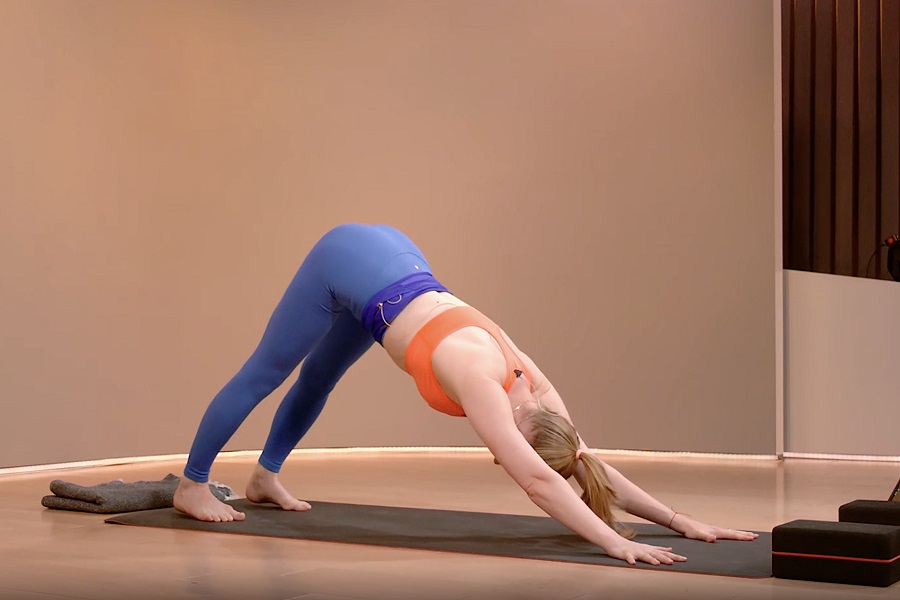
Modern yoga culture has largely surrendered to the worship of momentum. Walk into an average studio, and you are far more likely to encounter athletic playlists, sweat-soaked mats, and rapid sequences designed to keep the heart rate elevated than an environment encouraging deliberate stillness. There is undeniable value in vigorous movement, yet an exclusively fast-paced practice often conceals an unintended side effect: it allows practitioners to outrun their own minds. When transitions are swift and physical demands are relentlessly intense, sheer adrenaline replaces interior attention.
Slow yoga practices—such as classical Hatha, Yin, Restorative, and mindful somatic movement—operate on an entirely different premise. They ask practitioners to abandon the safety of kinetic momentum and remain inside the sensations of a single shape for minutes at a time. In doing so, these approaches expose the baseline restlessness that defines modern life. Far from being a gentle, passive alternative to athletic flow, slowing down is an exacting discipline that systematically rebuilds our capacity for patience, fine-tunes interoceptive awareness, and restores the nervous system to baseline balance.
Stripping Away the Armor of Momentum
In a brisk vinyasa sequence, kinetic momentum handles much of the heavy lifting, both physically and psychologically. Moving rapidly through a series of familiar postures creates a rhythmic groove where the brain operates on semi-autopilot. If a pose brings up subtle frustration, boredom, or physical vulnerability, the next breath count sweeps it away into a new transition.
When you strip away momentum, you remove the buffer between your attention and your internal landscape. In a slow practice, holding an upright lunge or sinking into a supported forward bend forces you to confront the physics of the posture in real time. You begin to notice where your body leans to compensate for fatigue, where your skeletal alignment actually sits when muscles cease to grip, and how quickly your attention seeks an exit route.
Slowness functions as a magnifying glass for physical and psychological habits. Without speed to camouflage instability, small misalignments and subtle micro-tensions become impossible to ignore. This level of honesty can be uncomfortable, which is precisely why so many capable practitioners resist it. Yet it is within this friction that true movement literacy begins.
Developing Patience at the Edge of Discomfort
Patience is rarely an innate personality trait; it is a neurological and behavioral capacity built through progressive tolerance of unsettled states. Slow yoga creates a controlled laboratory for developing this tolerance by placing students directly in contact with mild, sustained discomfort and removing the option to escape through motion.
Uncoupling Sensation from Urgency
When you settle into a long-held posture, such as a seated hip opener or a supported heart bench, the body initially signals mild resistance. The mind’s default wiring interprets this sensation as an immediate problem that requires an immediate solution: you want to fidget, adjust your clothing, scratch an itch, or abandon the posture altogether.
By remaining still and breathing through the initial wave of restlessness, you train the brain to separate physical sensation from emotional urgency. You discover that a dull ache in the fascia or a wave of cognitive boredom is not an emergency. The gap between experiencing a sensation and reacting to it is where patience lives. Over time, this deliberate restraint rewires the impulse to immediately fix, flee, or control unfamiliar situations.
Relinquishing the Compulsion to Produce
Our professional and personal lives are dominated by output, productivity metrics, and tangible benchmarks. It is easy to drag this goal-oriented mindset onto the yoga mat, treating each posture as a target to be conquered or an aesthetic pose to be perfected for external validation.
Slow practices actively resist this transaction. A restorative pose offers no dramatic milestone to achieve, no sweat-soaked metric of a good workout, and no visually acrobatic silhouette. The work is entirely internal, requiring practitioners to sit with the fact that nothing is happening on the surface. Learning to value presence over performance cultivates an enduring patience with the body’s natural timelines—acknowledging that structural and mental transformation occurs through seasons of steady attention rather than episodic bursts of force.
Refining Interoception and Internal Body Literacy
Most fitness modalities train proprioception: our awareness of the body’s position in external space. Slow yoga places equal or greater emphasis on interoception—the nervous system’s capacity to perceive internal bodily signals, including heartbeat, visceral tension, breath volume, and subtle shifts in muscle tone.
When transitions are measured and postures are sustained, the sensory noise of the external environment fades. This quietude allows subtler somatic signals to surface into conscious awareness:
-
The involuntary clenching of the jaw or tongue when encountering a tight shoulder band
-
Asymmetries in the movement of the ribcage during deep diaphragmatic inhalation
-
The gradual, passive softening of connective tissue as the nervous system releases guarded muscular holding patterns
-
The subtle energetic difference between productive physical tension and protective, injurious strain
Cultivating high interoceptive sensitivity carries profound implications for long-term health. Individuals with well-developed interoceptive awareness are significantly better at recognizing the early symptoms of physical exhaustion, chronic stress, and systemic inflammation before those signals escalate into acute injury or illness.
Downregulating an Overstimulated Nervous System
The modern sensory diet is characterized by chronic, low-grade sympathetic arousal. Constant notifications, cognitive multitasking, and background anxiety keep the fight-or-flight mechanism perpetually simmering beneath the surface. Fast, strenuous physical exercise, while beneficial for cardiovascular health, often keeps the sympathetic system engaged.
Slow yoga acts as a deliberate neurological counterweight. Prolonged exhalations combined with gentle, unhurried physical shapes stimulate the vagus nerve, initiating parasympathetic dominance. In this state, heart rate slows, peripheral blood vessels dilate, and systemic cortisol levels decline.
Importantly, this downshifted state is not synonymous with mental dullness or sleep. Instead, it yields a state of relaxed vigilance: a calm, grounded alertness where the mind remains sharply perceptive without being reactive. When the nervous system feels safe, the defensive barriers of the mind drop, making genuine self-reflection and introspection possible.
Translating Mat-Born Composure into Everyday Life
The ultimate measure of any physical practice is not how gracefully one moves in a studio, but how well that practice sustains equanimity outside of it. The skills nurtured during an hour of deliberate slowness do not vanish when you roll up the mat.
When you spend months practicing stillness amidst physical and mental restlessness, your threshold for frustration expands dramatically in daily life. A delayed flight, a confrontational conversation, an interrupted workday, or a prolonged traffic jam ceases to register as an unbearable crisis. Having repeatedly sat through your own internal turbulence on the mat, you discover that you possess the grounded composure to navigate external friction with patience, clarity, and unhurried grace.