

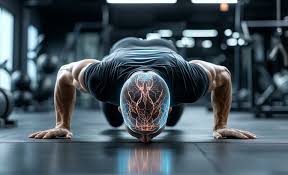
For decades, the fitness industry has revolved around muscular strength, cardiovascular endurance, and body composition. But as our understanding of the human body deepens, a new paradigm has emerged—Neurocentric Fitness. This advanced approach focuses on the brain and nervous system as the command center of movement, strength, recovery, and even metabolism. It goes far beyond traditional physical training, aiming to enhance the body by optimizing the neural pathways that control it.
Neurocentric fitness isn’t a fad—it’s the next evolution in high-performance training. By focusing on neurological precision rather than repetitive motion, it unlocks performance potential that many athletes never realize they possess.
What is Neurocentric Fitness?
Neurocentric fitness is a science-backed approach that prioritizes the brain, nervous system, and sensory feedback as the foundation of physical performance. Instead of training muscles in isolation, it enhances the communication between the brain and body to create more efficient, powerful, and coordinated movement patterns.
This methodology recognizes that every action—whether it’s a sprint, a lift, or a balance movement—originates in the brain. When neural pathways are optimized, muscles contract faster, reflexes sharpen, and injuries decrease.
The Core Principles Behind Neurocentric Fitness
1. Brain-Body Connection
At the heart of neurocentric training is the central nervous system (CNS). The CNS dictates how muscles fire, how quickly we react, and how efficiently we recover. By improving brain-body communication, athletes can refine coordination, strength, and motor control.
Neurocentric training involves exercises that stimulate the sensory systems—the visual, vestibular (balance), and proprioceptive systems. This triad forms the foundation of movement control. For example, when the visual system improves, balance and spatial awareness become more stable, which translates into better lifting mechanics or sprint posture.
2. Sensory Integration Training
Neurocentric fitness includes sensory drills that train the body’s internal communication systems. The goal is to enhance how sensory data (like balance, eye position, and muscle feedback) flows to the brain.
These drills might include:
-
Oculomotor training: Eye movement exercises to improve focus, reaction time, and coordination.
-
Balance training: Using unstable surfaces to stimulate the vestibular system.
-
Joint position drills: Recalibrating the body’s awareness of limb placement to improve proprioception.
When sensory systems are integrated effectively, movement efficiency increases and fatigue decreases, leading to superior athletic output.
3. Neural Efficiency and Motor Learning
Most athletes train the body, but few train the nervous system’s efficiency. Neural efficiency refers to the ability of the brain to send fast, accurate signals to muscles. The more efficient this communication becomes, the less energy is wasted in every movement.
Neurocentric fitness enhances motor learning by using high-frequency, low-amplitude stimulation techniques—like targeted reaction drills or rapid resistance shifts—to strengthen neuromuscular connections. This leads to quicker adaptation and long-term skill retention, a crucial factor for high-performance athletes.
4. Neuroplasticity in Fitness
The brain is plastic—it can change and reorganize neural pathways through practice and stimulation. Neuroplasticity allows us to train not just muscles, but movement patterns themselves.
By repeating complex tasks under controlled variation, the brain refines these neural maps. For instance, a boxer practicing micro-movements under varying levels of fatigue or visual restriction trains the brain to perform better under pressure. Over time, this leads to automatic, precise, and efficient execution in real-world scenarios.
5. Cognitive Conditioning
Physical performance isn’t just physical—it’s cognitive. Elite athletes often report that their greatest gains come from mental clarity, decision-making speed, and stress regulation. Neurocentric training incorporates cognitive elements directly into workouts to strengthen these abilities.
Cognitive conditioning might involve tasks like:
-
Performing visual tracking while lifting.
-
Reacting to auditory cues during agility drills.
-
Using dual-task training to improve focus and multi-processing.
This approach merges mental and physical conditioning, creating athletes who are not just strong, but mentally sharp under pressure.
6. Neurological Recovery Optimization
In traditional fitness, recovery often focuses on muscle repair. Neurocentric fitness expands this concept to include neurological recovery—the brain and nervous system’s ability to reset after stress.
Post-training, the nervous system requires recalibration. Techniques such as breath regulation, vagus nerve stimulation, and guided sensory relaxation help restore parasympathetic balance, improving sleep quality, hormone regulation, and mental clarity.
These practices reduce the long-term effects of overtraining by ensuring that both the mind and body recover together.
The Advantages of Neurocentric Fitness for Advanced Athletes
1. Enhanced Reaction and Decision Speed
By optimizing neural pathways, athletes react faster to unpredictable situations. This is particularly useful in sports requiring split-second decisions—like basketball, MMA, or tennis.
2. Reduced Risk of Injury
Improved proprioception and sensory awareness mean the body responds more efficiently to instability or sudden movement, reducing the likelihood of strains or tears.
3. Improved Strength Without Hypertrophy
Neurocentric training increases muscle activation efficiency, allowing greater force generation without necessarily adding bulk. This is crucial for weight-class athletes or those prioritizing speed and agility.
4. Better Energy Utilization
By eliminating inefficient neural patterns, the body expends less energy per movement, improving endurance and extending peak performance time.
5. Superior Longevity and Cognitive Health
Training the brain along with the body enhances both physical and mental resilience, leading to better long-term athletic health and slower cognitive decline.
Applying Neurocentric Fitness to Real-World Training
Incorporating neurocentric methods doesn’t require abandoning traditional fitness; it complements it. Here’s how athletes can start integrating brain-based performance principles:
-
Warm-Up with Sensory Activation: Begin sessions with visual tracking, joint mobility, or balance drills to “wake up” neural circuits.
-
Include Dual-Task Workouts: Combine physical and cognitive challenges, such as reacting to lights or sound cues during sprints.
-
Train Under Controlled Chaos: Introduce unpredictability (e.g., varying resistance or unstable surfaces) to simulate real-world demands.
-
Prioritize Nervous System Recovery: Use breathwork, controlled cold exposure, or meditation post-training to restore neural balance.
-
Monitor Neural Fatigue: Track concentration, reaction time, and HRV alongside muscle fatigue to gauge true readiness.
When implemented consistently, these strategies dramatically enhance coordination, speed, and endurance, while minimizing the mental fatigue that often caps athletic potential.
The Future of Fitness is Neuroadaptive
Neurocentric fitness is leading the charge toward neuroadaptive performance systems—AI-driven platforms that analyze neural data in real time. By merging biometric monitoring with brainwave analysis, these systems will predict cognitive fatigue, emotional stress, and readiness before physical symptoms appear.
This convergence of neuroscience, technology, and training science is revolutionizing what it means to be fit. The future athlete will not only be strong and lean but also neurologically optimized—able to perform at maximum capacity with minimal cognitive cost.
FAQs
1. How is neurocentric fitness different from functional training?
Functional training improves movement quality, but neurocentric fitness goes deeper by enhancing the brain’s ability to control and refine those movements.
2. Can neurocentric training help with chronic pain?
Yes. By retraining the nervous system’s interpretation of pain signals and improving sensory feedback, neurocentric methods can reduce pain sensitivity and improve mobility.
3. Do you need special equipment for neurocentric workouts?
Not necessarily. While tools like balance boards, reaction lights, or VR systems can enhance training, most drills can be done using bodyweight and basic gym equipment.
4. Is neurocentric fitness suitable for endurance athletes?
Absolutely. Improved neural efficiency leads to better coordination and energy conservation, which are vital for long-duration performance.
5. How long does it take to see results?
Athletes often notice improved focus and coordination within weeks, but full neural adaptation typically develops over 8–12 weeks of consistent training.
6. Can neurocentric fitness improve mental health?
Yes. Because it strengthens stress regulation systems and promotes parasympathetic activation, it can improve mood, focus, and emotional resilience.
7. What role does sleep play in neurocentric recovery?
Sleep is critical for neuroplasticity. It allows the brain to consolidate motor learning and reset neural communication pathways for peak performance.
In conclusion, neurocentric fitness represents the frontier of advanced training—a holistic, brain-first approach that redefines how we think about performance. By integrating neuroscience with physical conditioning, it unlocks a new level of athletic intelligence, efficiency, and longevity that no traditional program can match.