

Introduction
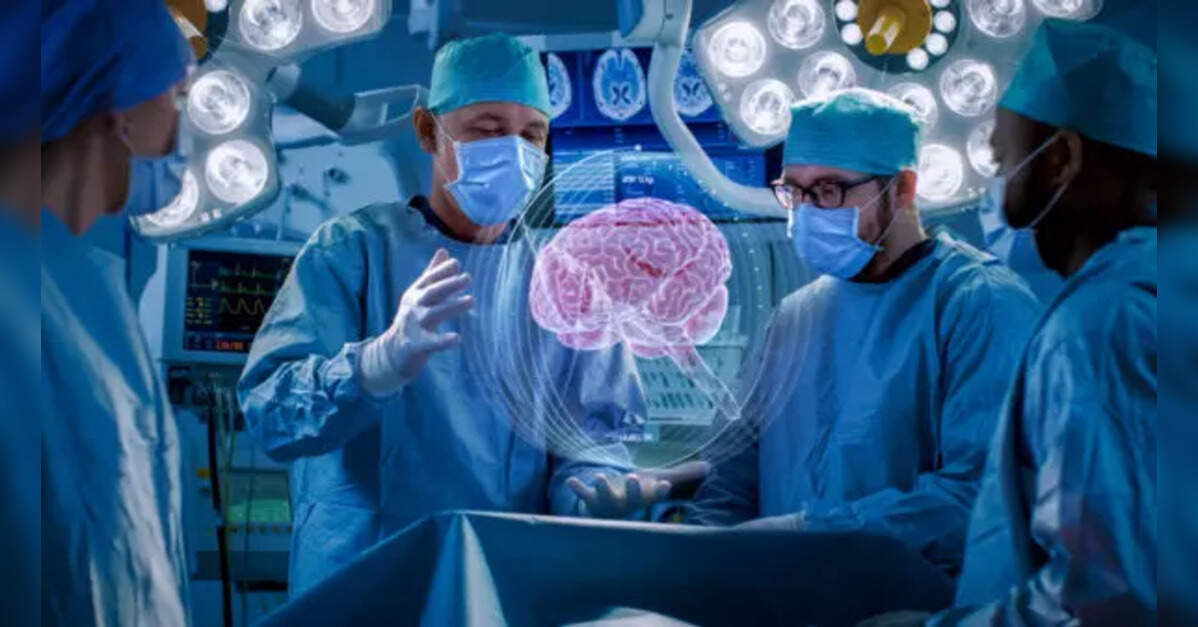
Medicine is evolving beyond traditional boundaries, entering an era where artificial intelligence (AI) and machine learning (ML) play a transformative role in patient care. Rather than replacing clinicians, this new approach—often termed Augmented Medicine—empowers them with intelligent tools that enhance precision, reduce diagnostic delays, and improve overall outcomes.
Augmented medicine represents a fusion of human expertise and algorithmic power. It’s not about removing the physician from the equation but about amplifying their capabilities with data-driven insights. From diagnostics to patient monitoring, AI-driven medicine is reshaping how healthcare systems operate, leading to faster, more accurate, and more personalized medical care.
Why Augmented Medicine Matters
In conventional medicine, physicians rely heavily on intuition, experience, and established diagnostic frameworks. However, the explosion of healthcare data—electronic health records, genomic data, imaging studies, and wearable sensors—has created challenges in interpretation and application. No human can efficiently analyze millions of data points within seconds; AI can.
Key advantages of augmented medicine include:
-
Enhanced diagnostic accuracy: AI identifies subtle patterns in imaging or laboratory data that humans might overlook.
-
Early detection of diseases: Predictive algorithms can forecast conditions like sepsis, cardiac arrest, or cancer recurrence before symptoms manifest.
-
Operational efficiency: Automation of administrative tasks, from documentation to triage, allows clinicians to dedicate more time to patient care.
-
Personalized treatment strategies: AI models integrate genetics, lifestyle, and medical history to tailor therapies for each individual.
Augmented medicine isn’t just an innovation—it’s an evolution driven by necessity.
Transforming Diagnostics: Beyond Human Vision
AI in Radiology and Pathology
Radiology and pathology are two of the most AI-ready disciplines due to their dependence on visual data. AI algorithms trained on thousands of medical images can identify microcalcifications, tumors, or subtle anomalies faster and often more accurately than the human eye.
For example, deep-learning models now assist radiologists in detecting early-stage lung nodules, mammographic lesions, and cerebral hemorrhages. Similarly, digital pathology platforms use AI to classify tissue samples, evaluate cancer margins, and quantify immune responses in tumors.
Impact on clinical workflow:
-
Shorter diagnostic turnaround times.
-
Reduced inter-observer variability.
-
Improved triage by prioritizing abnormal scans.
-
Enhanced confidence in complex cases.
AI in Clinical Decision Support
Beyond visual data, augmented medicine extends into clinical decision support (CDS) systems. These systems synthesize vast patient data—labs, prescriptions, comorbidities—to generate insights that assist physicians in real-time decision-making.
AI-powered CDS tools alert clinicians about potential drug interactions, dosage miscalculations, or guideline deviations. This ensures safer, evidence-based care while reducing human error.
Predictive Analytics and Personalized Medicine
Predictive Risk Modeling
Predictive models are transforming preventive medicine. By analyzing historical patient data, genetic markers, and lifestyle patterns, AI systems can predict a patient’s likelihood of developing chronic diseases like diabetes, cardiovascular disorders, or cancer.
Hospitals are using predictive analytics to foresee hospital readmissions, identify deteriorating patients, and allocate resources efficiently. Predictive alerts now help intensive care units anticipate complications hours before they occur—giving clinicians a vital window for intervention.
Genomics and Precision Treatment
The integration of AI in genomics has made precision medicine a clinical reality. Algorithms analyze genetic sequences to identify mutations linked to diseases, guiding personalized drug selection and dosage. For instance, AI-driven analysis helps oncologists match cancer patients with targeted therapies based on their tumor’s genetic profile.
This level of personalization minimizes adverse effects, enhances efficacy, and shifts medicine from reactive to proactive care.
The Role of AI in Clinical Workflow Automation
Reducing Administrative Burden
One of the biggest frustrations for healthcare professionals is administrative overload. AI is revolutionizing documentation, coding, and data entry through natural language processing (NLP) systems. Voice-enabled medical scribes transcribe consultations, summarize visit notes, and automatically generate structured reports—allowing physicians to focus entirely on the patient.
Enhancing Patient Engagement
Augmented medicine also improves patient engagement through AI-driven chatbots, virtual health assistants, and remote monitoring systems. These tools provide continuous communication between patients and providers, offering reminders, symptom tracking, and lifestyle coaching. As a result, patient compliance improves, and chronic conditions are better managed outside the clinical setting.
Ethical and Practical Challenges
Despite its promise, augmented medicine faces several critical challenges that must be addressed before full-scale adoption.
1. Data Privacy and Security:
AI systems require massive datasets to function effectively. Protecting patient data from breaches, misuse, or unauthorized access remains a top priority. Regulations like HIPAA and GDPR guide how health data can be stored, shared, and processed, but breaches still occur.
2. Algorithmic Bias:
If the training data lacks diversity, AI models may produce biased outcomes. For example, diagnostic algorithms trained primarily on one ethnic group might underperform when applied to another. Ensuring dataset diversity and transparency in model design is vital for fairness.
3. Lack of Explainability:
Clinicians often hesitate to rely on “black-box” algorithms whose decision-making processes are opaque. There’s a growing demand for explainable AI (XAI) systems that provide interpretable insights aligned with clinical reasoning.
4. Integration with Clinical Workflows:
AI tools must integrate seamlessly with existing electronic health record systems and fit naturally into clinicians’ daily routines. Poor usability or data fragmentation can reduce adoption rates.
5. Regulatory and Ethical Oversight:
Medical AI solutions require rigorous testing and regulatory approval before deployment. Ethical frameworks must ensure that AI augments—rather than replaces—clinical judgment.
The Future of Augmented Medicine
In the near future, AI will not only assist physicians but also collaborate with them in diagnosis, treatment planning, and monitoring. Emerging technologies like federated learning, which enables AI to learn from decentralized data sources without violating privacy, will expand global collaboration in healthcare.
Moreover, the rise of multimodal AI—combining text, imaging, lab results, and sensor data—will enable more holistic and context-aware patient evaluations. Physicians will increasingly act as interpreters of AI-derived insights, balancing data precision with human empathy and ethical judgment.
Augmented medicine’s success lies not in replacing doctors but in empowering them to practice smarter, faster, and more compassionately.
Frequently Asked Questions (FAQ)
1. How is augmented medicine different from traditional AI in healthcare?
Augmented medicine focuses on collaboration between AI and clinicians. Instead of automating decisions, it enhances clinical reasoning and supports human judgment.
2. Will AI eventually replace doctors?
No. AI complements rather than replaces medical professionals. The human element—empathy, ethics, and contextual understanding—remains irreplaceable.
3. What skills should doctors develop for the AI-driven future?
Clinicians should focus on data literacy, digital ethics, and understanding how to interpret and validate AI-generated insights.
4. How can hospitals safely adopt AI systems?
By ensuring proper data governance, obtaining regulatory clearance, validating models locally, and providing training for end-users.
5. Are patients comfortable with AI involvement in care?
Most patients are open to AI if it enhances accuracy and convenience. Transparency about AI’s role fosters trust.
6. What are the biggest risks of relying on AI in medicine?
The main risks include data bias, overreliance on algorithms, and errors stemming from poor data quality or model misinterpretation.
7. What does the next decade hold for augmented medicine?
Expect deeper integration of AI into all aspects of care—from genomic analysis to home-based monitoring—driving a shift toward personalized, predictive, and preventive healthcare.